

Working Class Heroes
John Lennon

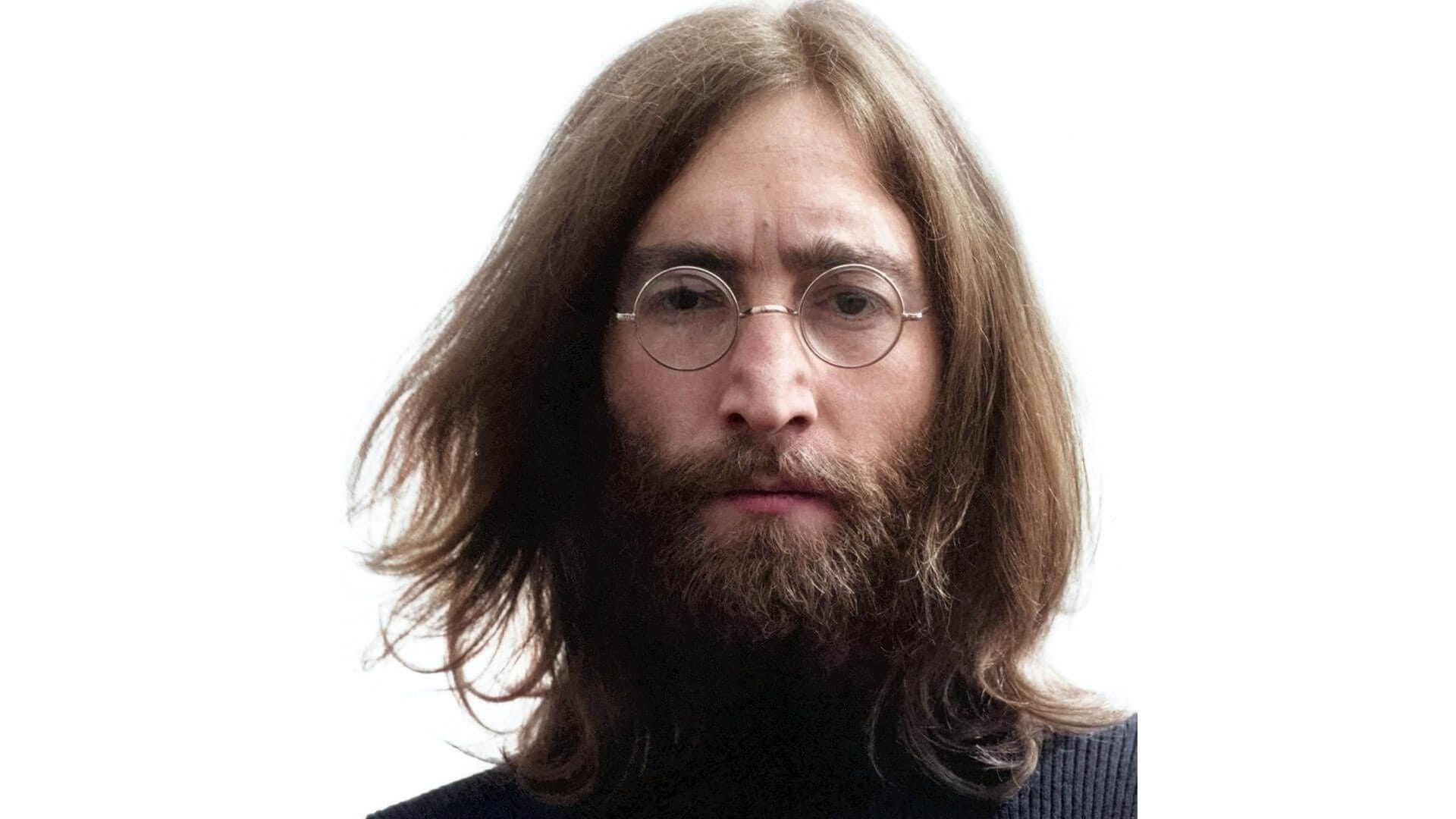
From the music hall to the stand-up comedian, from the penny dreadful to the poet laureate, the working class are increasingly major voices in certain art forms. Many may not attend or consume some of the more ‘legitimate’ forms of art, and the teenage romantic poets of the working class’s work in rhyme can be truly awful to behold (I’ve beheld a lot) but, as practitioners, we are all over whatever opportunities we can grasp. So fervent has been our embrace and achievement in some of these forms that the idea of anyone from other social classes having anything useful to say in them could be held faintly ridiculous.
For Sean O’Hagan in the Guardian, “Pop culture, to a degree, belonged to the chancers, the misfits, the outsiders, the feisty, often left-leaning mavericks and messy kids from housing estates who, by and large, created, shaped and wrote about it. Likewise, many of the seismic British pop-cultural moments – from 60s pop and rock through mod, punk, 2-Tone and acid house.”[1]
Perhaps the most obviously working-class art form is rock and roll and its many derivations and off-shoots. It must be remembered when considering this form as giving voice to a great many white working-class artists, that the ownership and authorship of these musics was originally black and that its adoption by white voices was initially an act of cultural appropriation. While the adopted estuary drawl of Jagger and his allies may have been intended as a tribute to Muddy Waters and Howlin’ Wolf, their versions of these songs brought those songs to a new white audience who may well have made the mistake of thinking that The Stones wrote them themselves. In fact, their first album was all blues covers; the second featured two original songs; and it was only on their third album, ‘Out of Our Heads’, which still featured a majority of covers, that the partnership eventually came up with a hit song, ‘The Last Time’. The Beatles’ first album, ‘Please, Please Me’, also featured an array of covers[2], only this time from more diverse sources than the Stones had taken their influences, and The Who’s first album, ‘My Generation’, (1965) also featured James Brown and Bo Diddley covers.
Post this appropriation, the form has become a means through which working-class voices can find the conduit through which they might eventually commune with ‘higher’ versions of culture or the means through which they might articulate their own discontent at their conditions and, at its best, it can be profoundly political. The first of these – rock and roll as a gateway drug to other things – appeared in the late 1960s early 70s. The Beatles were the first of the rock and roll artists to put the accent on the second word, and they propagated the idea that a rock band could be serious in intent. Lennon published two books of nonsensical prose and poems ‘In His Own Write’ and ‘A Spaniard in the Works’, both of which showed his indebtedness to surrealism, and his song, ‘I am the Walrus’, was clearly sourced from literary characters created by Lewis Carroll. The album, ‘Revolver’, was regarded by critics to be an avant-garde work.[3] From the G7sus4 chord at the beginning of ‘A Hard Day’s Night’ that suggested an interest in atonality to the collage of ‘A Day in the Life’, they experimented with avant-garde influences to the extent that they opened these up to a generation that may have never have heard of them otherwise. Lennon’s partnership with and marriage to the artist (and primary school classmate of Akihito, Emperor of Japan) Yoko Ono, famed for her performance art piece ‘Cut Piece’ at the Carnegie Hall during which audience members were invited to cut off parts of her clothing with scissors, brought him into contact with the conceptual world opened up by students of the composer John Cage who took the ideas of Marcel Duchamp and his ready-mades and combined these with other elements of Dadaism to create the Fluxus movement which focussed on the creation of art for which the end point was undefined.
Following the demise of the Beatles, Lennon moved further into avant-garde stylings. Lennon’s first collaborations with Ono were on the albums ‘Unfinished Music No. 1: Two Virgins’ and ‘Unfinished Music No. 2: Life with the Lions’. These, influenced by the work of Karl-Heinz Stockhausen and Steve Reich, featured fractured conversations over shifting tape loops and were, to an extent, a musical version of concrete poetry. The Plastic Ono band released, as the ‘B’ side of ‘Cold Turkey’, the genuinely beserk ‘Don't Worry Kyoko: Mummy’s Only Looking for Her Hand in the Snow’ which consisted of Ono caterwauled and ululated the phrase “Don’t Worry” over a loose and harsh blues groove, live versions of which could last up to 40 minutes.
The concept of ‘bag-ism’ that Ono, Lennon and came up with in which they would disappear into a bag together was drawn from a line in Antoine de Saint-Exupery’s ‘The Little Prince’ “One sees rightly only with the heart, the essential is invisible to the eyes,”[4] and the idea behind it was to remove the realm of appearance from encounters with them so that they might be judged not on the basis of who they were racially, and they would become only message: one of love.
You can see how a fan of the Beatles who followed Lennon to the end will have been introduced, through him, to a wider range of texts and artistic ideas and movements of which they might otherwise have been unaware. And it is as much this element of rock music, which, through its filtering of sources, opens up new realms, new ideas, new sources of inspiration for the autodidact pop fan as for any overtly political content.
Certainly, the Beatles had huge political influence over youth attitudes and even over the workings of society itself. In existing and in being so popular, the Beatles brought a large swathe of the population who had previously been voiceless to wider public attention, and they were the cause celebre and the dawning of the rebellious youth voice that set themselves in opposition to an antiquated and class ridden establishment. They set out the ideological lines of opposition that the whole counter cultural movement built on going forward: that of a youth movement that looked to themselves for guidance and not towards the views of an orthodoxy that sought control over people. It is unarguable that their 1967 song ‘All You Need is Love’ was the manifesto of the counterculture and the ‘Summer of Love’: it was number one in more or less every country in the world. They were also a significant force behind the Iron Curtain in convincing younger people there to take their first faltering steps towards the rejection of totalitarianism.
They aligned themselves loosely with the labour movement and appeared in a photo opportunity with Harold Wilson at his constituency in Knowsley before the 1964 election. They were consequently credited with delivering the youth vote to him. When playing in front of members of the royal family, Lennon, before the last song, ‘Twist and Shout’, asked of audience members “The people in the cheaper seats, clap your hands. And the rest of you, if you’d just rattle your jewellery.”[5] Eventually, Lennon returned the badge of belonging the establishment had given him by handing back the MBE he had been given as a protest against the government’s support for both the Vietnam War and for Nigeria’s involvement in the Biafra conflict in which the breakaway republic of the Igbo people was re-assimilated by force into Nigeria.[6]
So, this group of working-class boys from Liverpool genuinely changed the world and Lennon,[7] in particular, made causes that reverberate fifty and sixty years on that were of genuine historical importance. Not the least of his achievements was the song ‘Working-Class Hero’, the lyrics of which are an excoriating examination of what it is to be working class: “As soon as you’re born, they make you feel small … They hurt you at home, and they hit you at school. They hate you if you’re clever, and they despise a fool ... You think you’re so clever and classless and free, but you’re still fucking peasants as far as I can see.”[8]
[1] Sean O’Hagan, ‘A Working Class Hero is Something to be, But not in Britain’s Posh Culture’, The Observer, 26thJanuary 2014 https://www.theguardian.com/culture/2014/jan/26/working-class-hero-posh-britain-public-school
[2] (It should be noted that The Beatles perhaps were not unaware of their debt nor of civil rights issues since their first album ‘Introducing … The Beatles’ was released on Gary, Indiana label, Vee-Jay Records, which was owned by African Americans and had previously released Jimmy Reed who the Beatles covered. They also refused to play to segregated audiences).
[3] Griel Marcus, in E.J. Laino et al, In My Life: Encounters with The Beatles (Mount Prospect: Fromm International Publishing Corp., 1998) p.242
[4] Antoine de Saint-Exupery, The Little Prince
[5] Andrew Grant Jackson, ‘The Beatles Play for the Queen’, Slate (4 November 2013) Archived from the original on 2 April 2019. Retrieved 21 November 2019.
[6] Though he also suggested in a self-deprecatory flourish that he was peeved at the chart position of his wildly uncommercial and harrowing Plastic Ono Band single, ‘Cold Turkey’, which only reached number 14 in the charts as, rather surprisingly, the first musical depiction of heroin withdrawal failed to be the massive pop hit is promised to be.
[7] It must also be noted that, for all his achievements, there have been suggestions that he was abusive to women. This is no small matter, of course, and any teacher thinking of suggesting Lennon as any form of working-class role model might want to reconsider it on this basis.
[8] John Lennon, ‘Working Class Hero’