

The Working Class and Literature
Maintenance of an Imaginary Fence?

It is worth pointing out that there are many people who would question for their own purposes whether the white working-class actually have a culture. This denial of the existence of something that obviously exists falls into the same category as denying that the class of people actually exist.
“We’re all middle-class now.”
“Are we f*** as like?”
This is the active denial of oppression, the denial of the existence of inequality, the denial of the importance or power of class consciousness by a group of people who have enough of that consciousness to see that denying it in others is of economic value. This denial will generally come from sources close to the establishment, but it can also be found in purportedly left-leaning journals that can sometimes seem quite hideously detached from the people they claim to seek to support. Thomas Sutcliffe, in the normally right-on Independent, reported that, “In fact, the defence of working-class culture, as something unique to one group of people is, more often than not, maintenance work carried out on an imaginary fence.”[1] He goes on to make the statement that “culture … shouldn't have a social class at all” [2] which, for a bright guy, seems to be quite a dense denial of much of the last three hundred years of human history.
The cultural achievements of the white working class extend over many different areas of practice: linguistic, gustatory, artistic, athletic and political, and it is a little known fact that, as Jonathon Rose writes in ‘The Intellectual Life of the British Working Class’, “before science was professionalised at the end of the nineteenth century, working-class naturalist societies [which generally met in the pub] were active participants in scientific research.”[3] It is beyond the scope of this book to attempt to catalogue all of these, but to deny the achievements of a class of people who have always had the pieces stacked against them is to perpetrate the idea that we are a culture-free bunch of animals prone to drinking and fighting and swearing and little else, when the truth is that, in and amongst the drinking and the fighting and the swearing, the intellectual, artistic and cultural achievements of the working class are substantial.
When I present on this issue, I change the contents of the slide that introduces the idea of this rich cultural history. If I’m in Widnes, which is nearer Liverpool than Manchester, I will show a slide with pictures of Kenny Dalglish arms raised in triumph, the Beatles, GMB picket lines, (now boarded up) pubs, Widnes Rugby league teams and woolly backs;[4] if I’m in Bromley, I will show pictures of Kenny Sansom in full flight, Bill Wyman, Peggy Spencer, HG Wells[5] and Lionel Atwell.[6] The point is that the cultural achievements of the white working-class are remembered in their communities and are often localised.
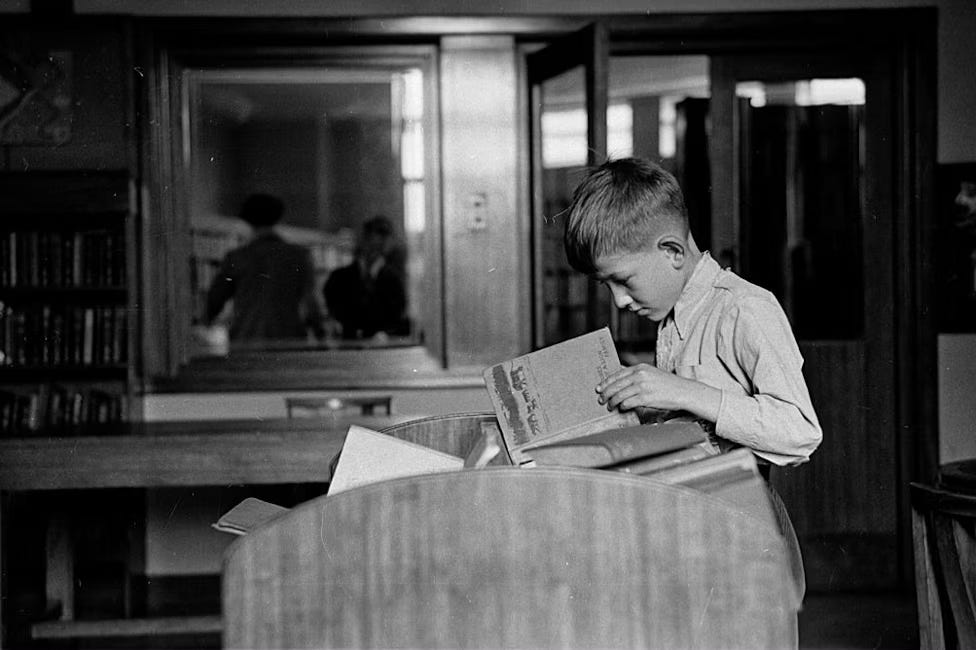
But those cultural achievements are not just in terms of their engagement with popular culture. In what might be regarded a now distant past, as Jonathon Rose has observed, “especially in the late nineteenth and early twentieth centuries, after the achievement of mass literacy but before radio and television, working-class culture was saturated by the spirit of mutual education.”[7] Books were seen as public property to be shared, and there is a grand history and tradition of engagement with ‘great books’: a tradition that, sadly, now seems to be depleted to the point of disappearance. The canonical arguments of right and left have often failed to realise one thing. While left and right tend to agree that a dead white (and chiefly) male canon will be likely to deliver a more culturally obedient populous, and one side argues that this is a good thing while the other argues against it, what is not noticed is that the idea of a repressive curriculum is not the real impact of the working class’s history of engagement with such books since most of them exalt freedom and individuality.
The way in which we view such texts in terms of their position in the social space is not the way in which the readers view them, and they generally have quite an emancipatory impact. The working-class child who realises they can understand Shakespeare, Blake and Keats is one who is subject to a profound emancipatory epiphany that affects his or her future engagement with the intellectual realm. As Jonathan Rose writes, “Contrary to all the intentions of the authors, classic conservative texts could make plebeian readers militant and articulate.”[8] The more we read, the more our perspectives alter and this reading may lead us to better, more developed understandings of how politics works. Reading the conservative canon, historically, led to other areas of study.
Kier Hardie, noting that previously “British navvies were intellectually the lowest … They took no interest in public affairs; in the mess hut or the canteen you never heard a word of discussion on political and social matters,”[9] also noted the change in this. “Today navvies are amongst the keenest and most intelligent critics of political and social questions.”[10] Literacy amongst the working class leads directly to socialism as the more you read the more you are able to detect bias and propaganda, and better able to understand that the ruling class press drugs the workers with “trivia and distractions”[11] and to see the invisible reins of power, how well they are organised and who – exactly – it is that is pulling on your chains and why they’re doing it. The growth of working-class interest in the contents of the covers of a book became exponential with the rise of the labour movement: the two things were inextricably linked.
[1] Thomas Sutcliffe, Working Class Culture: That’s so Middle Class, The Independent 15th September 2009 https://www.independent.co.uk/voices/columnists/thomas-sutcliffe/tom-sutcliffe-working-class-culture-thats-so-middle-class-1787354.html
[2] Thomas Sutcliffe, Working Class Culture: That’s so Middle Class, The Independent 15th September 2009 https://www.independent.co.uk/voices/columnists/thomas-sutcliffe/tom-sutcliffe-working-class-culture-thats-so-middle-class-1787354.html
[3] Jonathan Rose The Intellectual Life of the British Working Class 2nd Edition (London: Yale University Press, 2010) p.71
[4] A slang Liverpudlian term for people from areas like Widnes who may have been used as ‘scab’ labour during docker strikes and who would have unloaded woolen bails leaving wool on their backs.
[5] Lest you doubt, and consider the basis of any prejudice here, is that achievement in linguistic realms is beyond us, he was the son of a domestic gardener/cricketer and a domestic servant who was placed into an apprenticeship in which he worked thirteen-hour days at the age of fourteen.
[6] Stage and screen actor born in Croydon.
[7] Jonathan Rose, The Intellectual Life of the British Working Class 2nd Edition (London: Yale University Press, 2010) p.83
[8] Jonathan Rose, The Intellectual Life of the British Working Class 2nd Edition (London: Yale University Press, 2010) p.39
[9] John Ward, ‘How I Got On: Life Stories by the Labour MPs’ Pearsons Weekly (15th March 1906) 655
[10] John Ward, ‘How I Got On: Life Stories by the Labour MPs’ Pearsons Weekly (15th March 1906) 655
[11] Jonathan Rose, The Intellectual Life of
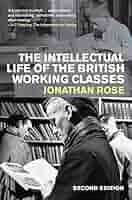
the British Working Class 2nd Edition (London: Yale University Press, 2010) p.50
I went to see a play about Wilko Johnson, of Dr Feelgood and Game of Thrones fame, last night. You would’ve enjoyed the arguments he had with his grammar school teachers about pronunciation, the headteacher of the school in which he taught about his hair length, the pupils he tried to teach Shakespeare and Wordsworth to, and his belief in the beauty to be found in Canvey Island, despite its proximity to industrial ugliness and decline.
Really interesting particularly the role of intellect leaning us to socialism. Shades of ragged trousered philanthropist here.